Mechanical Ratchet Jack Rentals
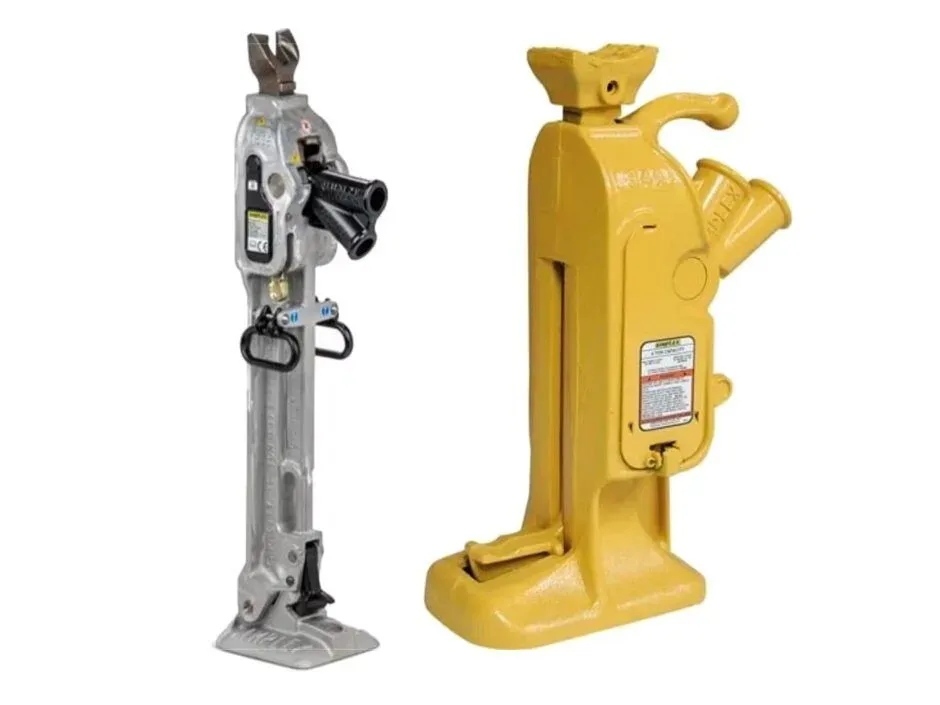
Mechanical ratchet jack rentals provide controlled incremental lifting for rail maintenance, structural support, heavy equipment positioning, bridge work, and industrial lifting applications. These manually operated lifting jacks use a ratcheting mechanism to safely raise and lower heavy loads without requiring hydraulic power.
Mechanical ratchet jacks are widely used in railroad maintenance, utility projects, construction work, mining operations, and machinery positioning applications where durable mechanical lifting equipment is required. Their simple mechanical design makes them ideal for remote jobsites and applications where hydraulic systems or external power sources are not practical.
Hydraulic Rentals supplies mechanical ratchet jack rentals for projects throughout New York, New Jersey, and Connecticut. For mechanical lifting equipment recommendations and rental support, call 866-522-5464 and speak with a lifting equipment specialist.
What Are Mechanical Ratchet Jacks?
Mechanical ratchet jacks are manually operated lifting devices that use a ratcheting climbing mechanism to raise loads incrementally. As the handle is operated, the internal ratchet system advances the lifting mechanism step-by-step while mechanically supporting the load during operation.
Unlike hydraulic jacks, mechanical ratchet jacks do not require pumps, hoses, or hydraulic fluid. Their rugged construction and self-contained operation make them highly reliable for outdoor environments, rail applications, and remote industrial work.
Mechanical ratchet jacks are commonly used where controlled lifting, mechanical load holding, and durable field operation are important.
Key Features & Benefits of Mechanical Ratchet Jack Rentals
Mechanical ratchet jacks provide dependable lifting performance for industrial and infrastructure projects.
Manual mechanical lifting operation
No hydraulic power source or external equipment is required.
Positive mechanical load holding
Loads remain mechanically supported during lifting operations.
Durable field-ready construction
Designed for harsh industrial and outdoor environments.
Controlled incremental lifting
Allows operators to raise loads gradually and safely.
Suitable for remote job locations
Ideal for projects where hydraulic or electric systems are unavailable.
Reliable low-maintenance operation
Mechanical systems require minimal setup and support equipment.
Common Applications for Mechanical Ratchet Jack Rentals
Mechanical ratchet jacks are used across a wide range of industrial and infrastructure applications.
Common applications include:
- Railroad and track maintenance
- Structural lifting and support
- Bridge construction and repair
- Utility and infrastructure projects
- Machinery positioning and alignment
- Mining and heavy construction work
- Heavy equipment maintenance
- Remote lifting applications
Mechanical ratchet jacks are commonly selected for outdoor and rugged jobsite conditions where reliability and simplicity are critical.
Types of Mechanical Ratchet Jacks Available
Different mechanical ratchet jack designs are available depending on lifting requirements.
Common configurations include:
Rail track ratchet jacks
Designed for railroad maintenance and track lifting operations.
Heavy-duty industrial ratchet jacks
Used for construction, structural support, and heavy lifting applications.
Low-clearance ratchet jacks
Designed for restricted-access lifting environments.
Portable field ratchet jacks
Used for utility work and remote maintenance applications.
Hydraulic Rentals can help determine the correct ratchet jack configuration for your project requirements.
Advantages of Mechanical Ratchet Jacks Over Hydraulic Jacks
Mechanical ratchet jacks offer several advantages in certain lifting environments.
No hydraulic system required
Eliminates pumps, hoses, and hydraulic fluid.
Mechanical load security
Loads remain supported by the ratchet mechanism during operation.
Excellent for remote applications
Ideal for rail, mining, and outdoor infrastructure projects.
Reduced maintenance requirements
Mechanical systems are simpler to maintain in harsh environments.
Reliable operation in difficult conditions
Performs well in dirt, mud, dust, and outdoor conditions.